ラベル developer の投稿を表示しています。 すべての投稿を表示

2012/10/02

Developers + Designers

One of the newest trends within the developer community in Japan is various ways of collaboration among the developers and designers. As the apps and websites' quality increases, demand for better UI and better design would be expected.

Example1: Simeji

A developer called @Adamrocker (Masahiko Adachi) created a Japanese IME for Android called Simeji as his side project while working for a tech company full time. It became one of the most popular Japanese IMEs, but his friend and a designer Rin Yano felt that there should be improvements in the UI as well as the logo. She started to help the project as the designer, and greatly improved the service. Last year, Baidu - the largest search engine in China bought Simeji, and the two of them joined Baidu.

Example2: Hackathons with developers and designers

Some of the hackathons keep the developer vs designer ratio to be 50:50, or don't have a target ratio but invites designers to join. This is awesome, since it increases the quality of UI which is always better for the users, the gender ratio of the participants gets more balanced (developer only hackathons ends up with a very high male ratio), and developers and designers get a chance to meet (usually they don't go to same events) which leads to future collaboration in other projects, not just the hackathon itself.

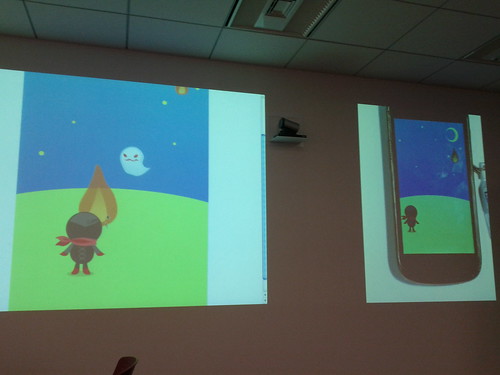
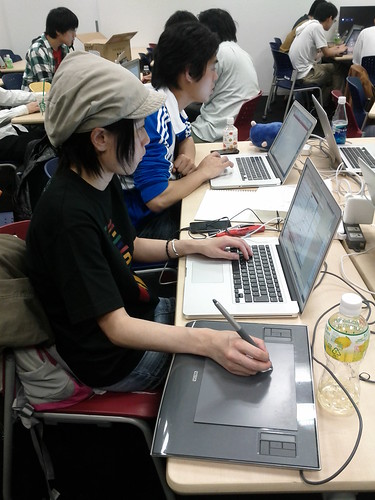
At one of those hackathons I organized that invited designers and developers, designers would start designing characters and logos for games that developers were making, start making mocks and wireframes while developers were coding, design beautiful background images while developers tackled new APIs. They can reach a different level just in one day hackathon.
EXP Hackathon

EXP Hackathon

EXP Hackathon

EXP Hackathon

Example3: html5j

html5j, the largest HTML5 community in Japan started as "HTML5 developers JP" community. Last year, they felt the need to open the doors to the designers and collaborate with them. They changed the community name to "HTML5 developers and designers JP" which is too long so shortened it to "html5j", they organized a conference called "Chrome+HTML5 Conference" which had a developer track as well as designer track, and secured seats for designers (there were 1000+ registration for 200 seats, so this was important).

Example4: Designers to learn xml

Chihiro Akiba, Asami Yamamoto and Adamrocker started a series of events for Android app designers to learn xml  so that they can increase what they can do with their app design, and to ensure that what they designed will not be wasted when it is implemented by the developers. "In the past, the role of developers and designers were separated, and designers were frustrated because their proposals for better design would not be implemented by the lack of understanding about the importance of design on the developers' side- and the developers were frustrated because designers would propose designs that were pretty but wasn't functional as the developers expect." says Chihiro. "If Android app designers learn xml, designers will be able to realize what they wanted the design to be, and the developers will be happy since you are decreasing their burden." In fact, some developers who joined the event told me they learned a lot from her lecture too. "I actually didn't know we can do such design work with xml."

Her first lecture was about 9-patch.


At her second lecture she further explained what designers can do using xml.


The third lecture will be about Custom UI.

Example5: Design Terrorism

"How can developers and designers better collaborate?" is a common question nowadays. Designer Teppei Machida proposed something called "Design Terrorism".

"Use of Github is very common among developers- they can create, publish, share, add to other people's code, and collaborate. It's awesome. Designers should be allowed to join too! But you need to be able to use that scary green screen..."


"So I made a service called Kuroigamen(black screen) to enable designers to post their designs to github without using terminal. Developers will be surprised if they received a design on Github."

@machida saw this website


 ...and sent this design.

Saw this website
 and sent this design.

The reason why it's a "terrorism" is because developers aren't expecting those designs to arrive, but I think it is the best terrorism in the world... ever ;)


BTW, the terminal being black might have been the scarecrow for designers. In Chihiro's lectures, she mentions "don't be afraid of the black screen"

 "Make it white and it's not scary any more."
"You even can make it brown. Don't be scared!"


Disclaimer: The opinions expressed here are my own, and do not reflect those of my employer. -Fumi Yamazaki

2012/09/30

Android developer communities in Japan

I wrote a blog post that there are so many tech events in Japan, thought it might be good to write another post about Android developer communities.

Japan Android Group


There are various Android communities in Japan, the largest one is "Japan Android Group[ja]" with 21,501 members in Google Groups[ja], 70% of which are developers. There are 78 members in the organizing committee[ja], led by Makoto Anjo.

They have 36 regional groups all around Japan, from Hokkaido to Okinawa.

Hokkaido 2008/11/29-     Tohoku 2009/10/29-     Aomori 2012/03/23-
Akita 2011/10/28-     Aizu 2011/03/04-     Ibaragi 2011/07/10-
Gunma 2010/07/10-     Saitama 2010/08/28-     Chiba 2011/04/29-
Tama 2010/06/29-     Machida 2010/09/18-     Akihabara 2012/02/10-
Yokohama 2010/07/04-     Yokohama Business 2011/04/20-
Yokosuka 2012/02/21-     Niigata 2010/07/15-     Kanazawa 2009/04/25-
Fukui 2010/03/07-     Yamanashi 2011/04/22-     Tokai 2009/10/24-
Hamamatsu 2011/03/12-     Kanasai 2009/02/21-     Kyoto 2010/12/19-
Sakai 2011/06/10-     Kobe 2010/07/31-     Chugoku 2009/05/16-
Oakayama 2009/07/18-     Shikoku 2009/06/26-     Fukuoka 2009/09/26-
Saga 2010/02/20-     Nagasaki 2010/07/12-     Kumamoto 2010/06/28-
Oita 2010/02/06-     Miyazaki 2010/08/01-     Kagoshima 2010/02/10-
Okinawa 2009/10/17-


They have a bunch of working groups:

HandsOn sessions working group, Android-SDK working group
Mashup working group, Contents working group
Embedded working group, PF working group
DalvikVM working group, Market Place working group
Business working group


They organize various events[ja], once a month in Tokyo with 300 participants, and more all around Japan. Total number of the events hosted by Japan Android Group counts nearly 500 events.

This is a screenshot of the recent ones:


They also organize the largest Android conference in Japan called "Android Bazaar and Conference [ja]", twice a year. Some of this conference counted more than 3,000 attendees, and the planning and execution is done 100% by the community members and volunteer staffs. The recent one was held in March 2012, with 11 simultaneous tracks. Time table, slides and videos can be seen from here [ja].


Translations of the session:

Keynote
- Changing Web - Impact of Cloud and Cloud Devices by Fujio Maruyama (Japan Android User Group)
- Cloud 2.0 - Building Information Platform by Yasuhiko Taniwaki (Ministry of Internal Affairs and Communications)

Developer Sessions 
-Docomo Developers Program & Building Contents for Docomo Devices (NTT Docomo)
-Human-centric technology on Fujitsu's Smartphone (Fujitsu)
-Introducing technologies included in "2011 Autumn Spring Model"including battery power conserving technology, and proposals for developers (Sharp)
-Full Picture of Android / Intel R Architecture (Intel)
-Sensing new World: KDDI's AR brand "SATCH" (KDDI Research Engineer) & (Toyama University Lecturer)
-Introducing the "Cotton Candy" cStick (FXI Technologies)
-Long Journey to End User Computing (Sharp Business Computer Software)

Design Sessions
-Proposal of Android front-end designs/ beautiful UI designs from a Designer's Perspective
-How to use "Android Design" for Designers (UX Designer)
-How Android Developers & Designers Can Efficiently Work Together (Tonchi Dot) & (Redo)
-A popular Android Game- "Nameko (Mushroom detective growing)" (Bee Works)  (Baidu)
-Extreme Fragment UI Programming (uPhyCa)

Games 
-Developing Android Applications with Better Java (Gree)
-Strategy to Maximize Smartphone contents of Bandai Namco Games (Bandai Namco Games)
-Square Enix Market ~Proprietary Market Strategy ~ (Square Enix Mobile)

Web Sessions
-Graphics Software used to Design Logos and Designs
-Human Friendly Game Design
-Microsoft's Mobile Web Strategy through Windows Phone (Microsoft)
-Building Smartphone sites, Android Tips & techniques (H2O Space)
-Latest Trend on Native Application with HTML5 & JavaScript (Lexus)

Middleware Sessions 
-Next Generation Mobile Game Development Workflow using Unity (Unity Technology Japan)
- Scaling Titanium Mobile (qnyp)
-Developing Smartphone Applications with Object Oriented Script Programming language Ruby using "Rhodes" (KoubouM)
-Introducing "Arctic.js"- Game Development Framework for Smartphone Browser Games  (DeNA)
-Designing Android Application UX with PhoneGap & jQueryMobile (GMO Internet)

Business Sessions 
-New Strategy for Smartphone Ads (Google Online Partnership Group)
-Get Rich Quickly with Android. Global Cloud Service by Dentsu (Dentsu)
-Advertising through SSP, Case Study (ngi Group, Media Platform)
-Monetizing with Affiliate Marketing Based Content Distribution Platform (Cayto)
-Android Monetization In-App Billing & Reward Advertising (Contents One)

Users Session 
-Analyzing User Application Usage Patterns from User Statistics Data (Voyage Group)
-Introducing Parcoroid (Parco)
-Android Security: Using Android safely (Tao Software)

Media Sessions
-Android Writers Summit
-Analyzing Popular Android Articles (Nikkei BP)  / Analyzing Android Trend from access analysis of Ascii PLUS (Ascii Media Works)
-Differences between Free Online Media & Paper Media. Profitability & Ads, Can we trust online Media while they are dependent solely on ads? (ITMedia Alternative blog)

Extended Sessions 
-Confirmation of User Permission When Smartphone Apps Access Personal Data (The National Institute of Advanced Industrial Science and Technology)
-Android Girls Problem as seen from the eyes of Media & Services  / Attractive Android Application
-Talk Session among Engineers of Social Services (GREE / DeNA / mixi)
-Programmer Robocon- Making developers stars and change programming to contents

Specialist Sessions 
-Live Coding: Building Your Own Twitter Log Service in 40 Minutes (Techbooster)
-ABC 2012 Spring Robot Summit
-"BumpRadar" - Application to Detect the Land Level Differences (SmartDrive Meter)
-Smartphone for Social Welfare and Medical Care (Android Social Care Group)
-Tips for Developing Android Application for Android 2.x/3.x/4.x
-Android User Acceptance Test Guideline (Android Test & Evolution Club)
-Live Coding: Corona SDK - Code Less Play More (Japan Corona Group)
-Using OpenNI on Android: NUI application "TreasureHunter" (SIProp Project) 
-mbed & Android 
-Android related Development with Linaro by (Linaro.org) 
-Android UI Story and Techniques
-Designing local Android
-Android Debug Bridge (adb) (Kyoto Micro Computer)
-Verifying Android with SEAndroid (Android Security Group)
-Authoring tools to create Home Application (YSCI International)
-Possibility of Open Source Hardware with ADK (Tori Ningen)
-Androbook Sales Negotiations and One more thing (Crazy Works)
-Supporting Android x86 Architecture- Present and Future
-App Inventor is Not the End (Japan App Inventor User Group) 
-Let's Become Cupids of Android (Android Female Club) 
-Applications to Support the Communications of Handicapped People (TechFirm)
-Introducing Tokyo System House's Efforts on Security & Encryption API (Tokyo System House)

They also had Bazaar portion with 65 demo booths [ja].

They had support from Ministry of Internal Affairs and Communications, Gold Sponsors were the 2 major mobile carriers in Japan, and many silver and media sponsors.


OH and they were wearing costumes ;)

ABC2011Winter

Their next ABC conference is planned to be held on October 20th, 2012 in Sendai, and will be called "ICT ERA + ABC 2012" ICT meaning Information Communication Technology, ERA meaning Earthquake Reconstruction Aid, and will be discussing how IT can contribute to reconstruction after the disaster from 311. If you are interested, the website is here[ja]:


Android DEvelopers' cluB (deb)

Deb is a group focused on developers who seriously wants to build high quality Android apps, whereas Japan Android Group welcomes anyone who is interested in Android. They require members to have built and published at least one Android app on Android Market, or have knowledge on devices, or UI design.


Deb currently has around 130 members[ja], and organizes monthly meeting to do programming or sessions. Leaders are Takashi Egawa and Masahiko Adachi, both of whom are developers.

ABC2012s


Android Female Club


Android Female Club[ja]or Andronjo is literally a women only Android community, with 635 members, and led by Rin Yano, who is a designer. Some of them are developers, some are designer, some are users. They host various women only events on Android.


There are many more including Android Security Club[ja] (which was founded by a 17 year old developer who was concerned about Android's security),  NFC Lab[ja], and a whole bunch of other communities.

Disclaimer: The opinions expressed here are my own, and do not reflect those of my employer. -Fumi Yamazaki

2012/09/29

IT study events in Japan = massive

It's actually amazing how Japanese developers hosts so many study groups and study meetups and conferences. This is a screenshot of IT Study group calendar.


If you look closely at the number of meetups during the weekends, there are 36 events on 2/4, 41 on 2/11, 56 on 2/18, 60 on 2/25....

This is the schedule for today- 9/29. There's just so many options, so many events, and this is tech/IT event only. There's actually 50 in just one day.


It's just so hard to see what's happening just looking at this summary since there's way too many tech events in just one day, so I opened it up as follows. Among the 50 events in just one day today, of which half is Tokyo/Kanto area. I won't translate the whole thing, but translated parts of it so that you know what technology it is about (like Android, Perl, Ruby event etc).


Saturday, September 29
 [Tokyo] YAPC (Yet Another Perl Conference)::Asia Tokyo 2012 
 [Kobe]Entertainment Computing 2012「Enjoy&Entertain!」
11:00am
 [Osaka]iOS Dev hackathon #iosdevthon_kansai
11:00pm
 [Online]vimrc
9:00am
 [Ibaragi]IbarakiDC プログラマのための勉強会
10:00am
 [Tokyo]Reading Program Android 
10:00am
 [Yokohama]茶室で楽しむKOZOS拡張基板
10:30am
 [Tokyo]【UEC】Android hackathon【Android】 #AndroidTao
11:00am
 [Tokyo] Let's make something with PHP
11:00am
 [Kyoto]Google Maps Hackathon
11:00am
 [Kumamoto]CTF対策勉強会(実験的開催)
11:00am
 [Fukui]Hokuriku.NET vol.10 
11:00am
 [Sapporo]SaCSS + 10th WordPress handson
12:00pm
 [Tokyo]Hack the AndroidJUnit4 on Zusaar
12:00pm
 [Tokyo] server development handson in Tokyo #002
12:00pm
 [Tokyo]Android study group#43
12:30pm
 [Tokyo]NFC lab 
12:30pm
 [Tokyo]Windows Phone Hackathon in Tokyo#4 : ATND
1:00pm
 [Tokyo]ブラウザ彼女 開発会
1:00pm
 [Saitama]さいたま開発勉強会 vol5
1:00pm
 [Sapporo]iPhone Dev Sap
1:00pm
 [Osaka]Elements of Programming book reading 
1:00pm
 [Hiroshima]Open CAE study group
1:00pm
 [Nagoya]MMD study group
1:00pm
 [Kumamoto]Android development for beginners
1:00pm
 [Fukuoka]北九州 Information security 勉強会 第4回smartphone app development 勉強会
1:00pm
 [Tottori]鳥取Ruby会
1:00pm
 [Fukuoka]くるりんご!9月定例会開催のお知らせ
1:15pm
 [Saitama]横浜 Android Platform Club 第24回勉強会 さいたま編
1:30pm
 [Nagoya]合同Smalltalk勉強会@名古屋 #2
1:30pm
 [Shizuoka]第2回JAZUG静岡勉強会
1:30pm
 [Toyama]Open CAE勉強会@富山(第4回)
2:00pm
 [Fukuoka]#MA8 福岡MashupCaravan & Meetup
2:00pm
 [Tokyo]GHC source code reading #readghc
2:00pm
 [Sendai][online]第1回「デジタル教材勉強会in仙台」
2:00pm
 [Tokyo]MySQL study group
2:00pm
 [Osaka]social game study group
2:00pm
 [Nagoya]WordBench Nagoya study group
2:00pm
 [Aomori] concrete5 study group
2:30pm
 [Tokyo][online]JPUG 第24回しくみ分科会+アプリケーション勉強会
3:00pm
 [Nagano]長野ソフトウェア技術者グループ(NSEG) 第31回勉強会
3:00pm
 [Tokyo] hardware engineer cafe
5:00pm
 [Tokyo]CLTT読書会 第28回
5:00pm
 [Yokohama] speeding up websites
5:30pm
 [Nagoya] Netduino
6:00pm
 [Tokyo]Agile Samurai bookreading
6:30pm
 [Ustunomiya]toRuby分科会 in 宇都宮
6:30pm
 [Tokyo]wit preasents, Web directors meeting vol.1
6:30pm
 [Okayama] okayama-js
8:00pm
 [Yokohama]夜すまこん#2

Disclaimer: The opinions expressed here are my own, and do not reflect those of my employer. -Fumi Yamazaki

2012/09/28

Japan's strength comes from the "users"

I joined Atomico Open Office in Tokyo recently where Niklas Zennström, co-founder of Skype, and CEO and founding partner of Atomico joined as speaker. When asked what he likes about Japan, his answer was love for technology and innovation, seeks for high quality. "Japan was the leading the world on broadband, and I knew the world will be following Japan. I saw that in mobile too." He continued though, that "making a good product is much more important than the technology itself." Make good products, make good UIs that are easy for the users to use.

At The New Context Conference, Joichi Ito, director of MIT Media Lab spoke about how China is strong at hardware manufacturing, US is strong in software development, and Japan has strong  users. Which sort of resembles what Niklas mentioned- the Japanese users loves interesting and innovative stuff, cool stuff, demands high quality, and Japanese developers and makers are all exposed to this strong demand and desire for quality which pushed Japanese production to high quality.

At Google For Entrepreneurs Week in Tokyo, Kentaro Tokusei,  product management lead at Google Japan says "If you are able to satisfy Japanese users, you have a chance to be successful globally"and pushed the audience (entrepreneurs) forward by telling them "If you wish to do so, you can change the world."

Go go > Japanese developers!

Disclaimer: The opinions expressed here are my own, and do not reflect those of my employer. -Fumi Yamazaki

2012/08/17

GTUG Girls in Japan #gtuggirls


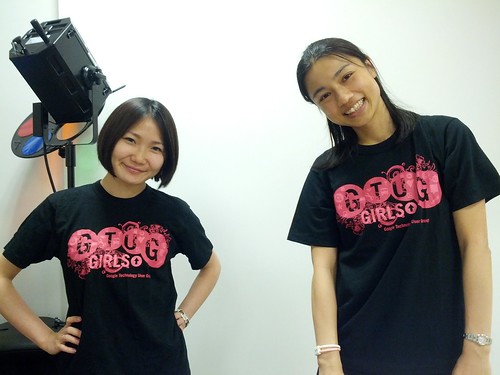
"GTUG Girls" stands for Google Technology User Group for Girls. When I started working for  Developer Relations team at Google, I realized there are so few female developers in Japan, and much fewer of them comes to developer events. When I asked some of them why this is the case, one of the reasons they mentioned was that when they go to developer events, it is full of men and they are often the only female there, feel lonely and don't want to go any more.

There had to be a developer community for women here. So the 4 of us- Yuki Anzai, Rin Yano, Miwako Ichijo and I started GTUG Girls back in June, 2011.


Our activity policy was 1) Meet people 2) Teach each other 3) Cross platform and 4) Create something.

Some tips from what we do at GTUG Girls:


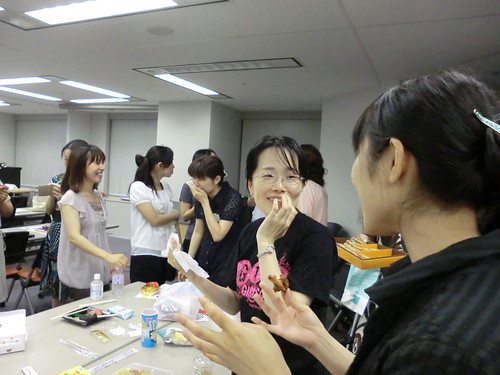
1) Ice breaker and friendly atmosphere

At GTUG Girls, we start the event with mingling time, accompanied with light meal. In general, women wants to make friends rather than feel lonely during the whole event not knowing anybody else and go home lonely. So we have them bring their own snacks or light meal to share, and mingle at the beginning of the event so that they have companies throughout. Also, we encourage participants to teach your neighbor - even if you are not an expert, if someone sitting next to you can't do what you just did, help them out. Having ice breaker at the beginning of the event is important to make this happen.

GTUG Girls #2


2) Opportunity to learn various technologies

Various girls' developer club exists, such as Android Girls' Group, Python Girls etc. At GTUG Girls, we cover various technologies, which enables participants to come and teach each other different skills and always learn new things- they can try and learn technologies that they would otherwise would not have tried. For example we have done codelabs of Android, HTML5, Google Apps Script, Chrome Extensions, Google App Engine, etc.

GTUG Girls #5


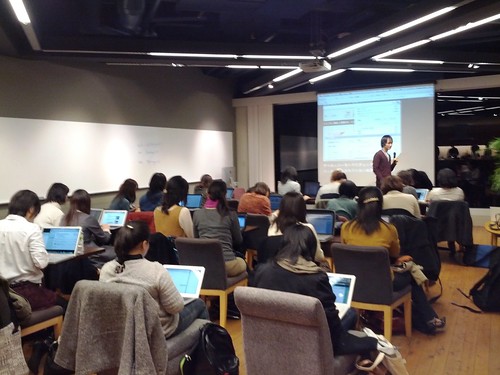
3) Always HandsOn, go home with “something that works, coded by yourself” 

Many of the female newbie programmer faces issues when they try to do programming on their own. They try it, but end up unable to make it work by themselves. Therefore, at GTUG Girls, we don’t do “lecture only, listen only” style events, which you have many opportunities already elsewhere. We focus on handson codelabs, and ensure that participants go home with “something that works” even if they are beginners, with the help of tutors. At GTUG Girls, we always have more tutor to participant ratio than usual events, so that participants don’t need to hesitate to ask the tutors. Being a beginner should not be a barrier- every single expert was a beginner at some point!


4) Many staffs, growing more potential organizers 

The problem that many communities faces is that the organizers have a lot of burden on themselves, and eventually burn out. At GTUG Girls, we welcomed anyone who wants to contribute to our community to join as staff. As a result, we have almost 20 staffs organizing GTUG Girls among 200+ members. As a result, we are able to distribute the tasks organizing events, and get more involvement from the community, more people feeling the event to be their own event, rather than just a participant. This also gave staffs experience to organize events that they have never tried- those who were just “participants” has gradually grown to “organizers” over the last year.

GTUG Girls


5) Venue

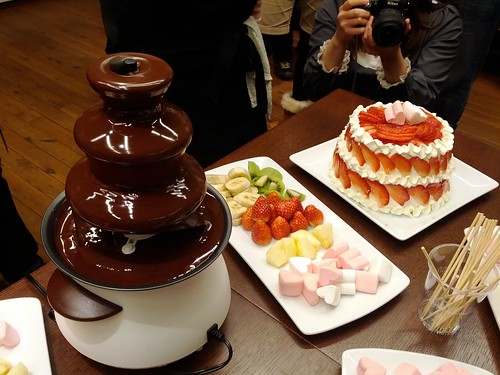
When you do events in the same venue all the time, the organizer of the venue will feel the burden. At GTUG Girls, we travel around offices of different tech companies. We have held events in various companies including Google, mixi, Nifty, Kayak, Loftwork, CookPad, GMO and Goga. Visiting various offices is fun. This is a photo of GTUG Girls we did at CookPad- they even had chocolate fondue machine in their office that they let us use :D

GTUG Girls #5


6) Feedback cycle

At the end of each event, we make a dedicated time for the participants to reply to survey, so that they can give feedback on what they felt, what they want to see in the future events. This gives us ideas on what we can do better to make GTUG Girls a better community.

7) Have fun

Since we’re using our spare time after work or during the weekends, community activities should be something fun for those involved.

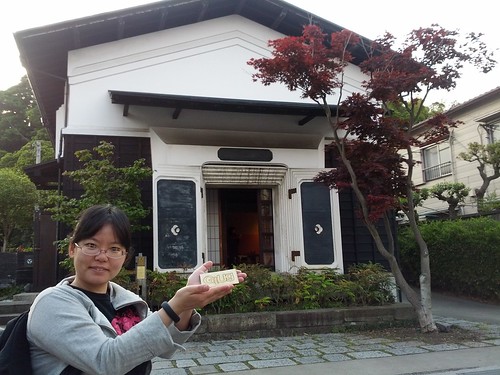
We did a field trip to Kamakura once, visitng a tech company listening to a techtalk about HTML5(SVG), visiting FabLab and playing with their laser printer, visiting temples and shrines, etc. This is the photo of FabLab Kamakura, me holding a piece of wood we printed "GTUG" with a laser printer.

GTUG Girls 鎌倉


Basically, “GTUG Girls” is a place where women who has something they want to learn / realize to gather and make it happen with the help of each other. It’s a place where we are able to propose what we want to learn and organize events, rather than waiting for someone to hold one. We also make sure participants don’t go home just listening, nor end up giving up with something that doesn’t work - it’s super important that they go home with something that works, that is coded with their own hands.

And I'm happy to tell you that we see much more women at our developer events now :D

Some blog posts I wrote in Japanese about the GTUG Girls events in the past in Japanese:
Chrome Extensions codelab at Cookpad office
Learn about HTML5 (SVG) in Kayak@Kamakura and play with laser printer at FabLab

GTUG Girls is currently held in Japan only, in Japanese language only, but feel free to start one in your country/language!

Pre-GTUG Girls- Android / HTML5 Girls' Only Codelab/Hackathon
Pre-GTUG Girls- Google App Engine Girls' Only Codelab/Hackathon
GTUG Girls #1 - Google Apps Script Codelab
GTUG Girls #2 - HTML5 Canvas Codelab
GTUG Girls #3 - Mini sessions
GTUG Girls #4 - Android widget Codelab (step1)
GTUG Girls #5 - Chrome Extensions Codelab blog post [ja]
GTUG Girls mini - What programmers should learn before programming blog post [ja]
GTUG Girls field trip - HTML5 SVG and FabLab visit blog post [ja]
GTUG Girls #5.5 - Learn about HTML5 offline functions blog post [ja]
GTUG Girls #6 - Android widget design Codelab (step2)
GTUG Girls #7 - Google App Engine Codelab
GTUG Girls #8 Google+ History API Codelab
GTUG Girls #9 - Web Intents Codelab  blog post [ja]
GTUG Girls #10 - WebGL & Three.js Codelab  blog post [ja]
GTUG Girls #11 - Web Socket Codelab  blog post [ja]
GTUG Girls #12 - Mobile Backend Starter Codelab
GTUG Girls #13 - Go Lang Codelab tweets [ja]
GTUG Girls #14 - How to use Git
GTUG Girls #15 - How to use Google Maps
GTUG Girls #16 - Test Driven Development
GTUG Girls #17 - Google Apps Script Codelab #2
GTUG Girls #18 - How to use D3.js
GTUG Girls #19 - How to use Web Audio
GTUG Girls #20 - Let's try using Docker
GTUG Girls #21 - Angular.js hands-on for beginners
GTUG Girls #22 - Yeoman for beginners
GTUG Girls #23 - Design Sprint in Hokkaido

Disclaimer: The opinions expressed here are my own, and do not reflect those of my employer. -Fumi Yamazaki