It's actually amazing how Japanese developers hosts so many study groups and study meetups and conferences. This is a screenshot of IT Study group calendar.
If you look closely at the number of meetups during the weekends, there are 36 events on 2/4, 41 on 2/11, 56 on 2/18, 60 on 2/25....
This is the schedule for today- 9/29. There's just so many options, so many events, and this is tech/IT event only. There's actually 50 in just one day.
It's just so hard to see what's happening just looking at this summary since there's way too many tech events in just one day, so I opened it up as follows. Among the 50 events in just one day today, of which half is Tokyo/Kanto area. I won't translate the whole thing, but translated parts of it so that you know what technology it is about (like Android, Perl, Ruby event etc).
Saturday, September 29
[Tokyo] YAPC (Yet Another Perl Conference)::Asia Tokyo 2012
I joined Atomico Open Office in Tokyo recently where Niklas Zennström, co-founder of Skype, and CEO and founding partner of Atomico joined as speaker. When asked what he likes about Japan, his answer was love for technology and innovation, seeks for high quality. "Japan was the leading the world on broadband, and I knew the world will be following Japan. I saw that in mobile too." He continued though, that "making a good product is much more important than the technology itself." Make good products, make good UIs that are easy for the users to use.
At The New Context Conference, Joichi Ito, director of MIT Media Lab spoke about how China is strong at hardware manufacturing, US is strong in software development, and Japan has strong users. Which sort of resembles what Niklas mentioned- the Japanese users loves interesting and innovative stuff, cool stuff, demands high quality, and Japanese developers and makers are all exposed to this strong demand and desire for quality which pushed Japanese production to high quality.
At Google For Entrepreneurs Week in Tokyo, Kentaro Tokusei, product management lead at Google Japan says "If you are able to satisfy Japanese users, you have a chance to be successful globally"and pushed the audience (entrepreneurs) forward by telling them "If you wish to do so, you can change the world."
Go go > Japanese developers!
Disclaimer: The opinions expressed here are my own, and do not reflect those of my employer. -Fumi Yamazaki
On 9/8, I went to join the Festival of Web developers in Japan- HTML5 Conference 2012 [ja].
Back in August 2011, html5j community and Google Japan co-hosted Chrome+HTML5 Conference[ja] at Google Japan office, but despite there were more than 1,000 registrants our office was only able to host 200- we needed to do a lottery and reject 800 registrants from participating...sad. @komasshu (Kensaku Komatsu) - the conference leader this year was very eager to fix that, and this year the conference was hosted by the html5j community, held in Keio University Hiyoshi Campus, with the capacity of 1,000- and decided to do it first-come first server rather than doing a lottery. What happened was that there was over 1,000 registration in less than 30 hours, and we needed to close the registration quickly...
Expectation towards HTML5 technology in Japan is huge, and we were able to learn that directly from those situation as well as from the excited crowd at the conference venue :D
HTML5 developer/designer community "html5j[ja]" is also growing rapidly -Google Groups[ja] surpassed 5,000 members and growing.
Keynote
Keynote by @takoratta (Takuya Oikawa) and @shumpei (Shunpei Shiraishi)- talking about the past, present and future of HTML5. Slides[ja] and video [ja]
Sessions
Time table and all of the session slides and videos can be seen here[ja]- although all of them are in Japanese.
If you are interested in what Japanese developers are interested in now, the top 3 was WebIntents, WebGL/Three.js, and WebRTC.
"The next generation web led by WebIntents" by @komasshu
"WebGL and Three.js" by @yomotsu. Twitter was abuzz (including those who weren't at the venue) with his demo controling MikuMikuDance using Three.js. He introduced many other cool stuff- including JSARToolKit - note that Japanese developers loves AR (augmented reality).
The programs in the hall started with the keynote, continued by a session by @myakura entitled "HTML, CSS and APIs" - slides and video, then there was the session "Web design in the HTML5 era".
Some of the sessions from developer track includes "The forefront of tough mobile development using HTML5" by @tkihira. Video here- quote "the forefront of mobile HTML5 is how to use Canvas / CSS3 and make the speed faster". Mobile web is super important in Japan, so this session seemed to be very popular. Others included "What's new in Chrome Apps / Extensions?" by @agektmr (slides and video), "Customizing jQuery Mobile" by @yoshikawa_t (slides and video), "HTML5 and IE10 and Windows8" by @ykasugai, "How to make lightweight web applications" by @os0x (slides and video).
[Designer Track]
When you look at the source of various famous websites, you start seeing odd stuff that you as developer would rather learn not to do... @futomi did a session called "Collection of weird HTML5 markups"- video and slides.
Other sessions from designer track included "Sass", "Evolution of CSS and new web tool", "User Interface Design Pattern With CSS3" and "Technical artists in gree that supports the smartphone games geared toward the world".
[Advanced Track]
Apart from the WebIntents, WebGL and Three.js, WebRTC sessions mentioned above, this track included "How to create parallax and responsive website using jQueryMobile" by @shumpei (slides and video), and "HTML Web Platform" session.
Sponsors
Last year's conference was co-hosted by html5j community and Google Japan- this year, in the spirit of the community "Connect, learn, and get excited", the community reached out to a broader web world. Platinum sponsors includes Google Japan, NTT Communications, Microsoft, Adobe, CA Mobile, gree and DeNA, and many more gold/silver/special/media sponsors. Thanks to all the sponsors for making the event happen!
The fun
I don't know why... but the Japanese developers loves to wear costumes ;)
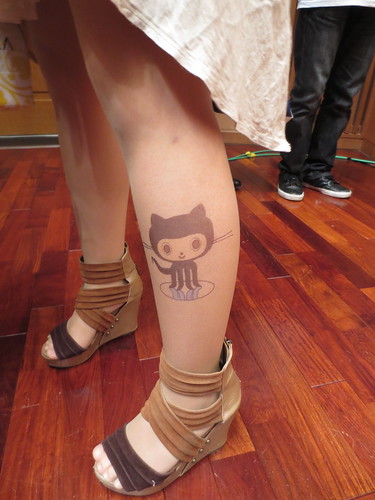
HTML5 paper tattoo and github stocking.
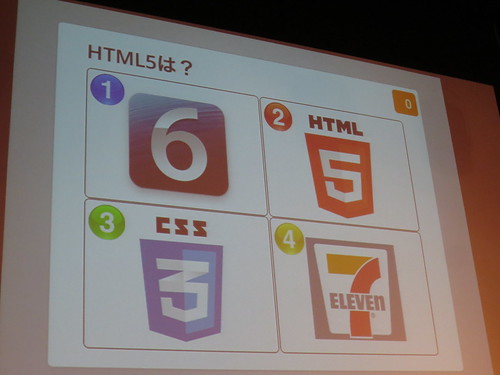
HTML5 quiz!
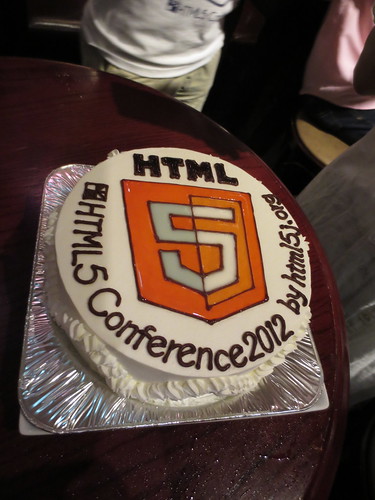
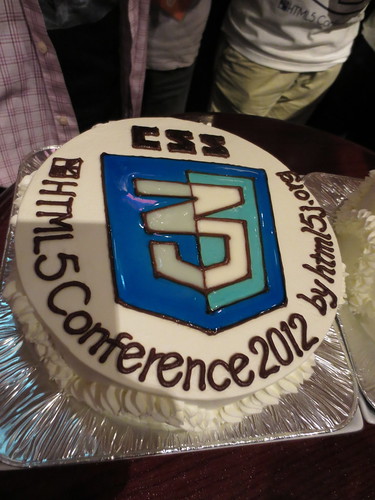
HTML5 cake and CSS3 cake.
Lunch in school cafeteria- not something you can experience everyday!
Groups photo
With all the staffs, volunteers, speakers and sponsors:
It was great to see the HTML5 community in Japan to expand, and the Conference to be supported by so many developers, companies and participants - the developer ecosystem. Thanks again to all the staffs, volunteers, speakers, sponsors and participants for making such a wonderful and successful conference!!
Appendix:
"html5j" is the community that organized this conference- in addition to that, they have been hosting monthly study groups solely on HTML5 with average 100 participants per session. Every. Single. Month. Amazing.
Topics covered includes:
0 Webkit/HTML5 study group
1 Webkit/HTML5 study group
2 Webkit & Opera/HTML5 study group
3 Webkit/HTML5 study group
4 HTML5 study group (Chrome extensions, Web Sockets)
5 HTML5 study group (Web Platform, HTML5 & API & IE9, HTML5 visual API)
6 HTML5 study group (HTML5 from video site, Lunascape6 and HTML5)
HTML5 study group techtalk special (W3C widget, physicSketch, xhr2 streaming, closure library etc)
7 HTML5 study group (Google I/O 2010 update, Audio Data API, WebSocket, etc)
8 HTML5 study group (IE9, Epub/CSS and Japanese layout and ebooks, DaVinciPad, WebSocket)
9 HTML5 study group (WebSocket, SVG, Geolocation, WebSRT, etc)
10 HTML5 study group (smartphone dev framework- jQTouch, jQuery Mobile, Phone Gap, Sencha Touch)
11 HTML5 study group (HTML5 and smartphone browser- HTML5& Android/iPhone, mobile browser)
12 HTML5 study group (Web Directions East guesttalk- state of HTML5, jQuery Mobile, etc)
13 HTML5 study group (NicoNicoDouga and HTML5, ShareCast, FileAPI, WebSocketRemote for iOS)
14 HTML5 study group (Titanium Mobile, Google Chrome OS/WebStore)
15 HTML5 study group (HTML5 for non-developers- jQuery Mobile, HTML5+OpenSocial+Raptor, etc)
16 HTML5 study group (What should we consider when developing web services that anyone can use?)
17 HTML5 study group (editors and authoring tool in HTML5 era- Dreamweaver CS5.5, Visual Web Developer Express, Vim)
18 HTML5 study group (Google I/O 2011 report, Closure Library)
19 HTML5 study group (Best practices- PJAX, Box2DJS, responsive web design, develop for TV)
20 = Chrome+HTML5 Conference
21 HTML5 study group (Game application development for smartphones by mobage, gree, ameba)
22 HTML5 study group (Graphics related APIs- processing.js, SVG, WebGL )
23 HTML5 study group (Device APIs- Stream API, GeoHex&GeoLocation API)
24 HTML5 study group (Omnibus)
25 HTML5 study group (Web and consumer electronics)
26 HTML5 study group (Web and e-publishing)
27 HTML5 study group (Designing rich clients)
28 HTML5 study group (HTML5 Businesses)
29 HTML5 study group (JavaScript Mobile frameworks)
30 HTML5 study group (Mobile UI frameworks)
31 HTML5 study group (JavaScript MVC frameworks)
Disclaimer: The opinions expressed here are my own, and do not reflect those of my employer. -Fumi Yamazaki
Speaking in Sendai, Japan on Monday, officials from Google requested that governments be more forthcoming when it comes to releasing information to the public during natural disasters, as it would allow people to use the internet more effectively. At Google’s first “Big Tent” conference in Asia, Rachel Whetstone, who oversees the company’s public policy and communications division, said that if countries are slow to release disaster information, citizens aren’t able to create new services that benefit everybody. She commented that the improvements to Google’s maps service are credited to the sharing of information.
"One of the challenges we have discovered in Katrina remains today, which is open data and being able to get it and deploy it and lay it on top of other data. It is what really makes a difference,"
Experts at the conference also stressed the importance of keeping a free flow of information on the Internet, even if it risked possible distribution of false information. Meanwhile, consumers of information must also be educated to maximise the benefit of IT in disasters, said Wahlstrom of the United Nations. "There is enormous work to do with the users -- communities, individuals, organisations, local governments -- about how to apply this data, and what to do with the knowledge actually at their fingertips today," she said.
Introductions :
Rachel Whetstone - Senior Vice President of Public Policy and Communications, Google Inc
Introductions : Brian McClendon - Vice President of Engineering, Google Inc
Introductions : Kan Suzuki - House of Councillors, Government of Japan
Communicating with disaster-affected communities
What are people really looking for in a crisis, and what is most useful for them to know? Using search analysis to illustrate their points, this panel of experts will offer historical points of reference to share observations about how, where and when certain information becomes critical to those facing the brunt of natural disasters. They will also share recommendations of how to put this information to use.
Speakers:
Gwi-Yeop Son - Director of Corporate Programs, United Nations Office for the Coordination of Humanitarian Affairs
Lou August - Co-Leader of Information and Communication Technology for Development, World Vision
Will Rogers - Global Coordinator Beneficiary Communication, IFRC
Jun Murai - Dean and Professor, Faculty of Environment and Information Studies, Keio University
Citizen mapping: impact of crowdsourced contributions on local population
Participatory mapping can play a significant role in disaster relief -- particularly in places where available maps are inadequate. Web-based mapping technologies, powered by the open Internet, give volunteers around the world the ability to crowdsource information and make some of the most complete maps of roads, events and resources ever. Discover how two Pakistani citizens helped their countrymen navigate the 20% of land underwater following floods in August 2010 and why the Haitian Diaspora has been credited with making the most complete map of Haiti's roads ever.
Speakers:
Omer Sheikh and Jabran Rafique, Pakistani Super Mappers
Wansoo Im - Assistant Professor at the Department of Family and Community Medicine, Meharry Medical College and President, VERTICES, LLC
Keynote speech :
Margareta Wahlström - UN Special Representative of the Secretary-General for Disaster Risk Reduction
From the web to the real world: coordinating logistics of relief and recovery
It's one thing to build technology so that it can be deployed in a crisis -- and it's another to make sure it's effectively used on the ground. In a best case scenario, responders can even anticipate needs and allocate resources to meet them well ahead of time. Find out how responders utilize the knowledge they gain from tech platform to coordinate food trucks, organize volunteers, develop targeted relief plans, conduct wide-scale damage assessments, and raise worldwide awareness of disasters.
Speakers:
Jarrod Goentzel - Founder and Director, MIT Humanitarian Response Lab
Hiroyoshi Watanabe - Director and Head of Public Policy Japan, Amazon
Sam Johnson - Young New Zealander of the Year and Founder of the Christchurch Student Army
Yorimasa Tanaka - General Manager of Division of Information Systems, Yamato Transport CO LTD
Moderator
Ishii Hiroshi, Associate Director, MIT Media Lab
Managing the crowd: benefits and challenges of social media in a disaster
People are increasingly using social networks to communicate and receive information in real-time, and it's no different in an emergency. Government agencies can adopt these social tools to rapidly inform the public during a crisis by building a subscriber base well ahead of time. Updating social media pages regularly helps people get used to relying on these sources for certain types and quality of information, but managing the upkeep and keeping users engaged isn't always that easy. But while crowdsourced intelligence and social networks can be critical sources of information in a crisis, they can also become detrimental rumor mills in an already panicked atmosphere. Managing and dispelling rumors while maximizing rights to free expression can be difficult for governments and organizations to do. How do we balance the value with the drawbacks?
Speakers:
James Kondo - President, Twitter Japan
Heather Leson - Director of Community Engagement, Ushahidi
Hiroyasu Ichikawa - President and Social Media Consultant, SocialCompany, Inc.
Mark Harvey - Executive Director, Internews Europe
Moderator
Jeremy Wagstaff, Reuters, Technology editor, Asia Pacific
Video Message from Motohisa Furukawa, Minister of State for Science and Technology Policy
The next generation of emergency alerting: using every day technologies to communicate effectively
Emergency broadcast systems have historically incorporated television networks, radio channels, and most recently even SMS as platforms for disseminating critical information in times of crisis. With more and more people going online for emergency information, how can we leverage the power of the Web to target and reach affected populations where they already are? Better alerting systems that are implemented in an open and interoperable fashion can allow others to interact with government systems to display alerts tailored to geography, vulnerability, and situation in an open manner so that more people can use or build on it.
Speakers:
Bill Ho - Manager Information Technology and Communication Unit, Asian Disaster Preparedness Center
Nigel Snoad - Product Manager, Google.org
Making use of an archive of disaster data
With all the information gathered from each disaster we face, there are infinite amounts of discoveries to be made as processes can be observed and assessed to become more efficient. How can the data be preserved for optimal use, what's the particular use of maintaining these archives for the future, and who should have access to them?
Speakers:
Jake Porway - Founder, DataKind
Wei-Sen Li - Director, Taiwan National Science and Technology Center for Disaster Reduction
Fumihiko Imamura - Professor, Tohoku University
Moderator
Ishii Hiroshi, Associate Director, MIT Media Lab
Building Internet networks for resilience
Without guarantees that a network will stay up when physical infrastructure might be impacted, it’s impossible to leverage any Internet existing Internet tools or create new ones to address different emergencies. When building infrastructure, governments should consider facilitating the deployment of decentralized, diverse networks that are built for resilience. And to fully harness the power of the Web in a crisis, governments should ensure that citizens have speedy access to broadband and mobile networks at a cost they can afford. The reach and impact of access to emergency information online and effective, timely communication depend on these two factors.
Speakers:
Takashi Shimozato - Interconnection Promotion Department Senior Manager, Interconnection Business Section NTT East
Kei Irie - NTT Docomo
Moderator
Norio Murakami, President of Norio Murakami Office Co., Ltd
How government data can save lives: open data and instant information sharing
The ability of the Internet to capitalize on its potential of assisting in crises depends on both companies and governments improving how they share information. Using divergent standards slows collaboration and response time. But speedy and open access, powering the ability of users to share and communicate information, accelerates relief efforts. Translating emergency information from government websites in arcane formats on personal computers and into open standards is critical, and should happen in advance of a disaster rather than in the middle of a crisis. Onerous licensing requirements and closed formats can make it difficult for responders and local populations alike to gain access. How can we make information that's critical to an emergency easy for the average individual without expert experience to access and share quickly and effectively?
Speakers:
Gisli Olafsson - Emergency Response Director at NetHope
Ian Gomez - Surveillance in Post Extreme Emergencies and Disasters (SPEED), World Health Organization Philippines
Klaikong Vaidhyakarn - General Manager, ChangeFusion
Michelle L. Chang - Program Officer, Governance and Law and Co-Chair, Technology Working Group, The Asia Foundation
Kenji Hiramoto, Executive Advisor for CIO, Ministry of Economy,trade and Industry (METI)
Moderator
Norio Murakami, President of Norio Murakami Office Co., Ltd
Disclaimer: The opinions expressed here are my own, and do not reflect those of my employer. -Fumi Yamazaki
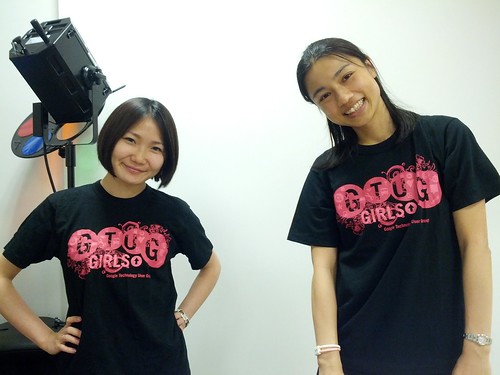
"GTUG Girls" stands for Google Technology User Group for Girls. When I started working for Developer Relations team at Google, I realized there are so few female developers in Japan, and much fewer of them comes to developer events. When I asked some of them why this is the case, one of the reasons they mentioned was that when they go to developer events, it is full of men and they are often the only female there, feel lonely and don't want to go any more.
There had to be a developer community for women here. So the 4 of us- Yuki Anzai, Rin Yano, Miwako Ichijo and I started GTUG Girls back in June, 2011.
Our activity policy was 1) Meet people 2) Teach each other 3) Cross platform and 4) Create something.
Some tips from what we do at GTUG Girls:
1) Ice breaker and friendly atmosphere
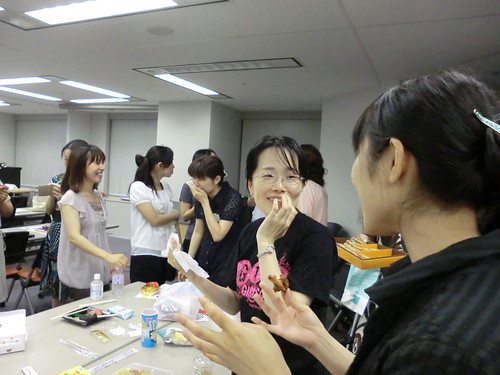
At GTUG Girls, we start the event with mingling time, accompanied with light meal. In general, women wants to make friends rather than feel lonely during the whole event not knowing anybody else and go home lonely. So we have them bring their own snacks or light meal to share, and mingle at the beginning of the event so that they have companies throughout. Also, we encourage participants to teach your neighbor - even if you are not an expert, if someone sitting next to you can't do what you just did, help them out. Having ice breaker at the beginning of the event is important to make this happen.
2) Opportunity to learn various technologies
Various girls' developer club exists, such as Android Girls' Group, Python Girls etc. At GTUG Girls, we cover various technologies, which enables participants to come and teach each other different skills and always learn new things- they can try and learn technologies that they would otherwise would not have tried. For example we have done codelabs of Android, HTML5, Google Apps Script, Chrome Extensions, Google App Engine, etc.
3) Always HandsOn, go home with “something that works, coded by yourself”
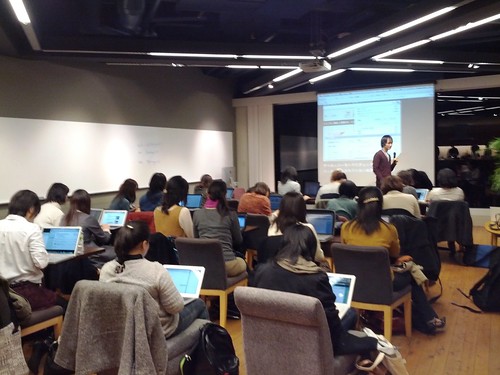
Many of the female newbie programmer faces issues when they try to do programming on their own. They try it, but end up unable to make it work by themselves. Therefore, at GTUG Girls, we don’t do “lecture only, listen only” style events, which you have many opportunities already elsewhere. We focus on handson codelabs, and ensure that participants go home with “something that works” even if they are beginners, with the help of tutors. At GTUG Girls, we always have more tutor to participant ratio than usual events, so that participants don’t need to hesitate to ask the tutors. Being a beginner should not be a barrier- every single expert was a beginner at some point!
4) Many staffs, growing more potential organizers
The problem that many communities faces is that the organizers have a lot of burden on themselves, and eventually burn out. At GTUG Girls, we welcomed anyone who wants to contribute to our community to join as staff. As a result, we have almost 20 staffs organizing GTUG Girls among 200+ members. As a result, we are able to distribute the tasks organizing events, and get more involvement from the community, more people feeling the event to be their own event, rather than just a participant. This also gave staffs experience to organize events that they have never tried- those who were just “participants” has gradually grown to “organizers” over the last year.
5) Venue
When you do events in the same venue all the time, the organizer of the venue will feel the burden. At GTUG Girls, we travel around offices of different tech companies. We have held events in various companies including Google, mixi, Nifty, Kayak, Loftwork, CookPad, GMO and Goga. Visiting various offices is fun. This is a photo of GTUG Girls we did at CookPad- they even had chocolate fondue machine in their office that they let us use :D
6) Feedback cycle
At the end of each event, we make a dedicated time for the participants to reply to survey, so that they can give feedback on what they felt, what they want to see in the future events. This gives us ideas on what we can do better to make GTUG Girls a better community.
7) Have fun
Since we’re using our spare time after work or during the weekends, community activities should be something fun for those involved.
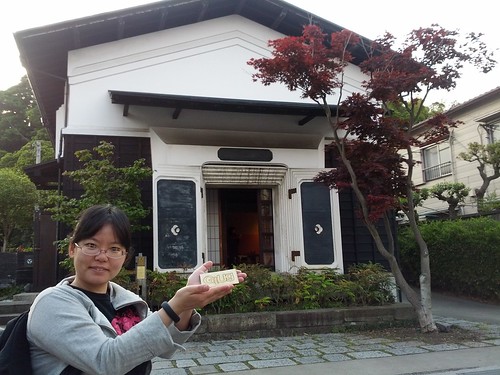
We did a field trip to Kamakura once, visitng a tech company listening to a techtalk about HTML5(SVG), visiting FabLab and playing with their laser printer, visiting temples and shrines, etc. This is the photo of FabLab Kamakura, me holding a piece of wood we printed "GTUG" with a laser printer.
Basically, “GTUG Girls” is a place where women who has something they want to learn / realize to gather and make it happen with the help of each other. It’s a place where we are able to propose what we want to learn and organize events, rather than waiting for someone to hold one. We also make sure participants don’t go home just listening, nor end up giving up with something that doesn’t work - it’s super important that they go home with something that works, that is coded with their own hands.
And I'm happy to tell you that we see much more women at our developer events now :D
GTUG Girls #7 - Google App Engine Codelab
GTUG Girls #8 Google+ History API Codelab
GTUG Girls #9 - Web Intents Codelab blog post [ja]
GTUG Girls #10 - WebGL & Three.js Codelab blog post [ja]
GTUG Girls #11 - Web Socket Codelab blog post [ja]
GTUG Girls #12 - Mobile Backend Starter Codelab
GTUG Girls #13 - Go Lang Codelab tweets [ja]
GTUG Girls #14 - How to use Git
GTUG Girls #15 - How to use Google Maps
GTUG Girls #16 - Test Driven Development
GTUG Girls #17 - Google Apps Script Codelab #2
GTUG Girls #18 - How to use D3.js
GTUG Girls #19 - How to use Web Audio
GTUG Girls #20 - Let's try using Docker
GTUG Girls #21 - Angular.js hands-on for beginners
GTUG Girls #22 - Yeoman for beginners
GTUG Girls #23 - Design Sprint in Hokkaido
Disclaimer: The opinions expressed here are my own, and do not reflect those of my employer. -Fumi Yamazaki